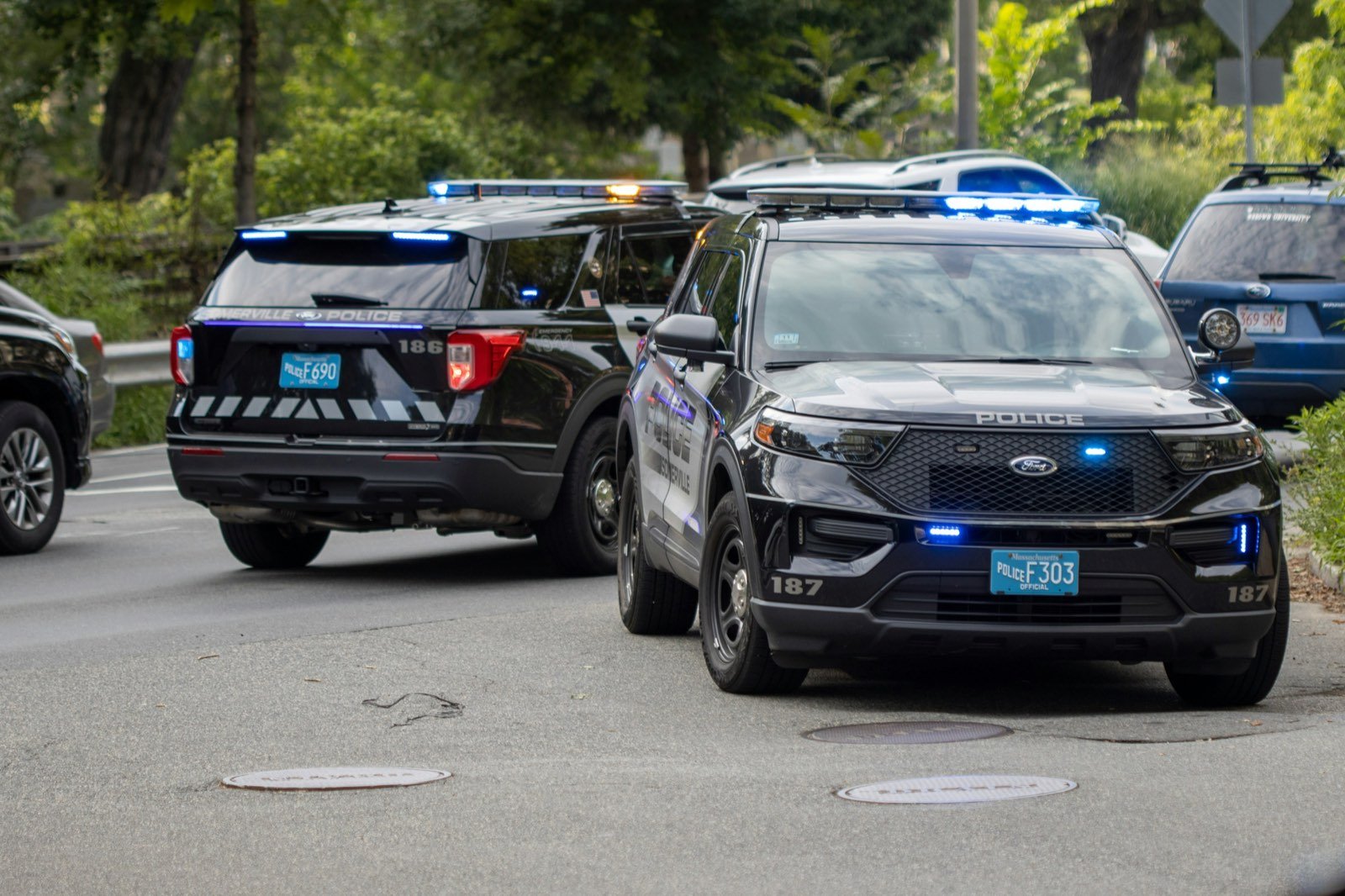
PATROL IS A WORKSPACE.
Our team includes active law-enforcement personnel. That perspective shapes how we think about reach, sightlines, radio use, mobile data, video, controls and the reality of spending a shift inside the vehicle.
Different assignment. Different vehicle.
Patrol
The everyday workhorse: warning, radio, mobile data, in-car video, partition and gear storage set up for a full shift.
Traffic
Visibility for roadside stops and crash scenes, rear traffic direction, and the equipment traffic units carry.
K-9
Rear compartment layouts for the dog, with the power and climate planning that keep the partner safe.
Supervisor + command
Extra radios, data and scene lighting for the vehicle that becomes a command post.
Transport
Partitions, transport seating and rear-seat cameras for prisoner transport.
Unmarked + investigations
Low-profile warning and subdued graphics that stay quiet until they're needed.
Six systems. One officer.
Every system competes for the same space, power and attention. Select one to see how we plan it.
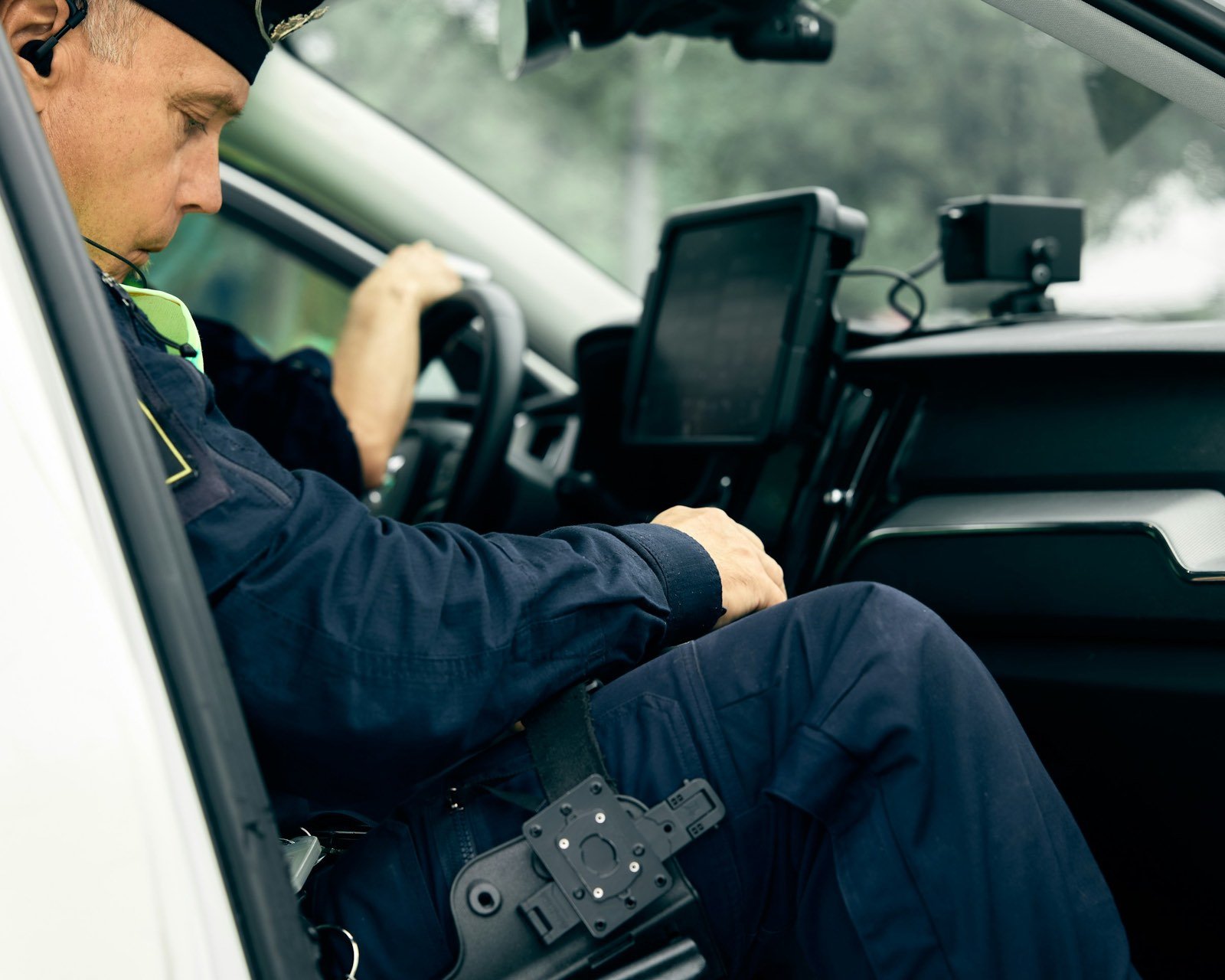
Reach. Sightlines. Service.
- Reach without searching. Frequently used controls make sense under divided attention, not only while parked.
- Protect the view. Displays, docks and cameras stay out of the windshield, mirrors and airbag paths.
- Plan the next repair. Accessible wiring, labeling and service paths matter across a working fleet.
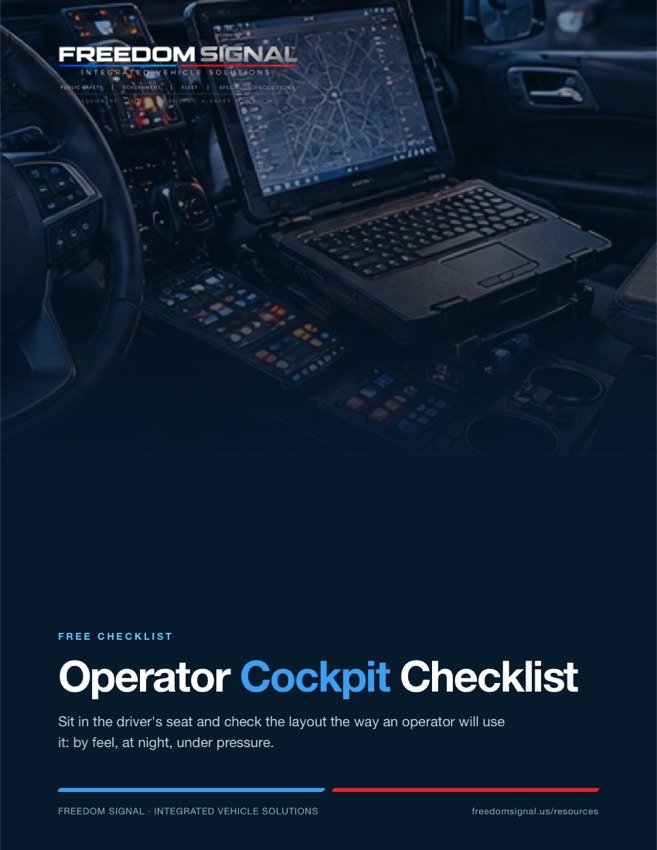
Operator Cockpit Checklist
Reach, sightlines, airbag zones and cable routing, checked from the driver's seat.
The vehicle is already engineered for duty.
Pursuit-rated and special-service platforms come with factory provisions, upfit guidance and electrical architecture built for police work. Integration should start with those realities.