RESPONSE DOESN'T WAIT.
Chief and command vehicles, support units and the technology inside apparatus, set up by people who know what arrival on scene looks like. Our team includes active fire, EMS and emergency-services personnel.
Every vehicle in the response.
Chief + command vehicles
SUVs and pickups set up as rolling command posts: radios, mobile data, scene lighting, a command board and storage for gear.
Apparatus technology
Radios, mobile data terminals, cameras and warning upgrades in engines, ladders and rescues. We work with the body builder's design and don't build apparatus bodies ourselves.
Support + utility units
Brush trucks, utility and logistics vehicles, investigators and training units.
Fleet standards
One standard configuration across stations, so every chief car and support unit works the same way.
Arrival is when the vehicle goes to work.
A command vehicle becomes the incident command post. A support unit becomes a power source and a light tower. Planning for what happens after arrival is the difference.
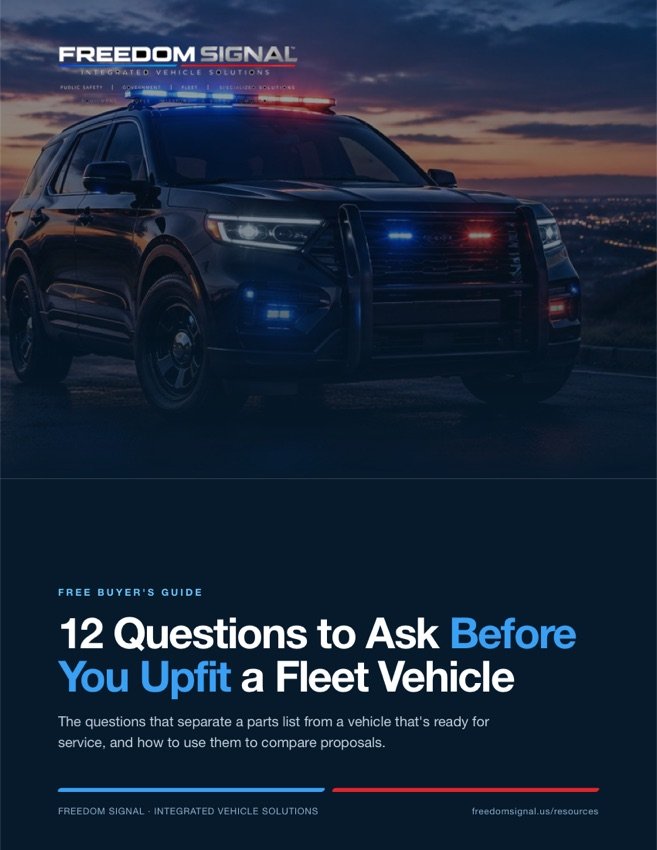
12 Questions to Ask Before You Upfit a Fleet Vehicle
The questions that separate a parts list from a vehicle that's ready for service.
- Command from the tailgate. A command board, radios and lighting set up at the rear where command actually stands.
- Multiple radios and channels. Fireground, dispatch, mutual aid and interoperability channels, each with clear controls.
- Scene lighting that lights the work. Lighting for personnel working around the vehicle for hours, not just warning traffic.
- Power for long incidents. Equipment that runs at idle or engine-off for an extended operation without stranding the vehicle.
- Gear in reach. Turnout gear, SCBA, medical bags and tools stored securely and in the order they're used.
- Visible at night. Reflective striping and markings that make the vehicle obvious on a dark roadway.